HPLC and Mass Spectrometry: How Peptide Purity Is Verified
A plain-language overview of the analytical methods behind COA purity figures and identity confirmation.
Research peptides are qualified using high-performance liquid chromatography (HPLC) and mass spectrometry (MS). These techniques separate and identify molecules in a sample, allowing laboratories to report purity and confirm that the material matches the intended sequence.
HPLC basics
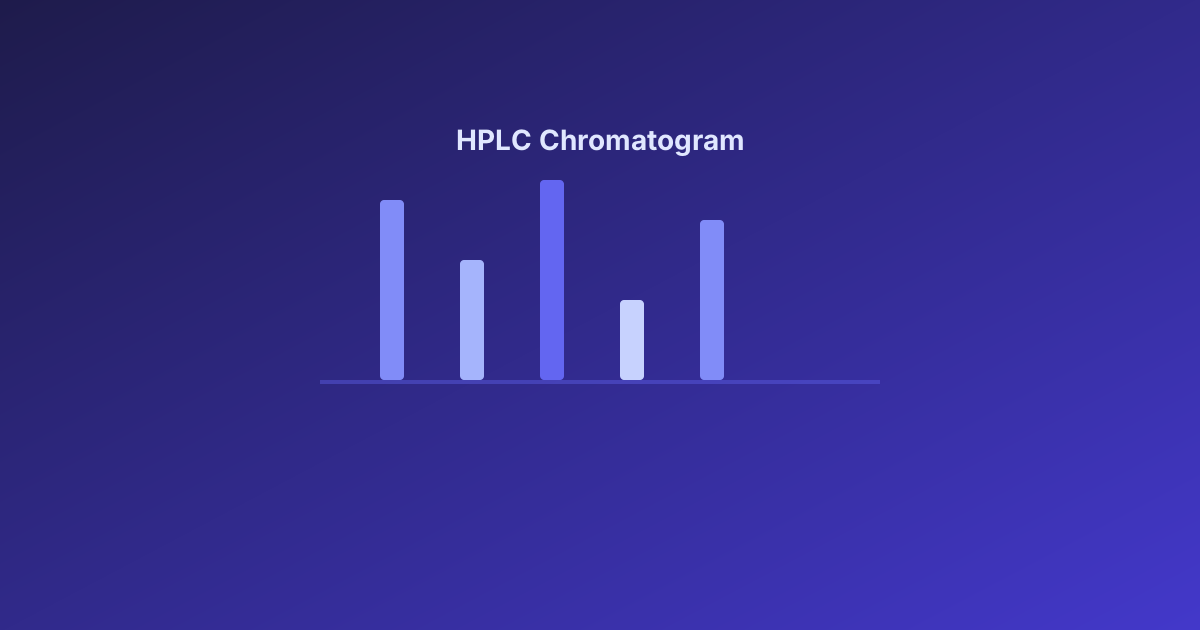
HPLC pumps a sample through a column that separates components by chemical properties. A UV detector records absorbance over time, producing a chromatogram. The main peak corresponds to the target peptide; smaller peaks indicate impurities such as incomplete sequences or modified variants. Purity is calculated as the main peak area divided by the sum of all relevant peak areas.
Mass spectrometry identity checks
MS measures mass-to-charge ratio. For peptides, the observed mass should match the theoretical molecular weight of the ordered sequence (accounting for counter-ions and salt forms). MALDI-TOF and ESI-LC-MS are common in supplier COAs. A match supports — but does not replace — full structural characterisation required for novel drug development.
Independent testing
Third-party laboratories such as Janoshik Analytical provide additional assurance by testing blind samples without supplier influence. Peptides EU publishes selected independent reports to support transparency for European research customers.
Analytical results describe material quality for research purposes only.
Related resources
All content is for in vitro laboratory research context only. Not medical advice.